What if coffee waste had more value?
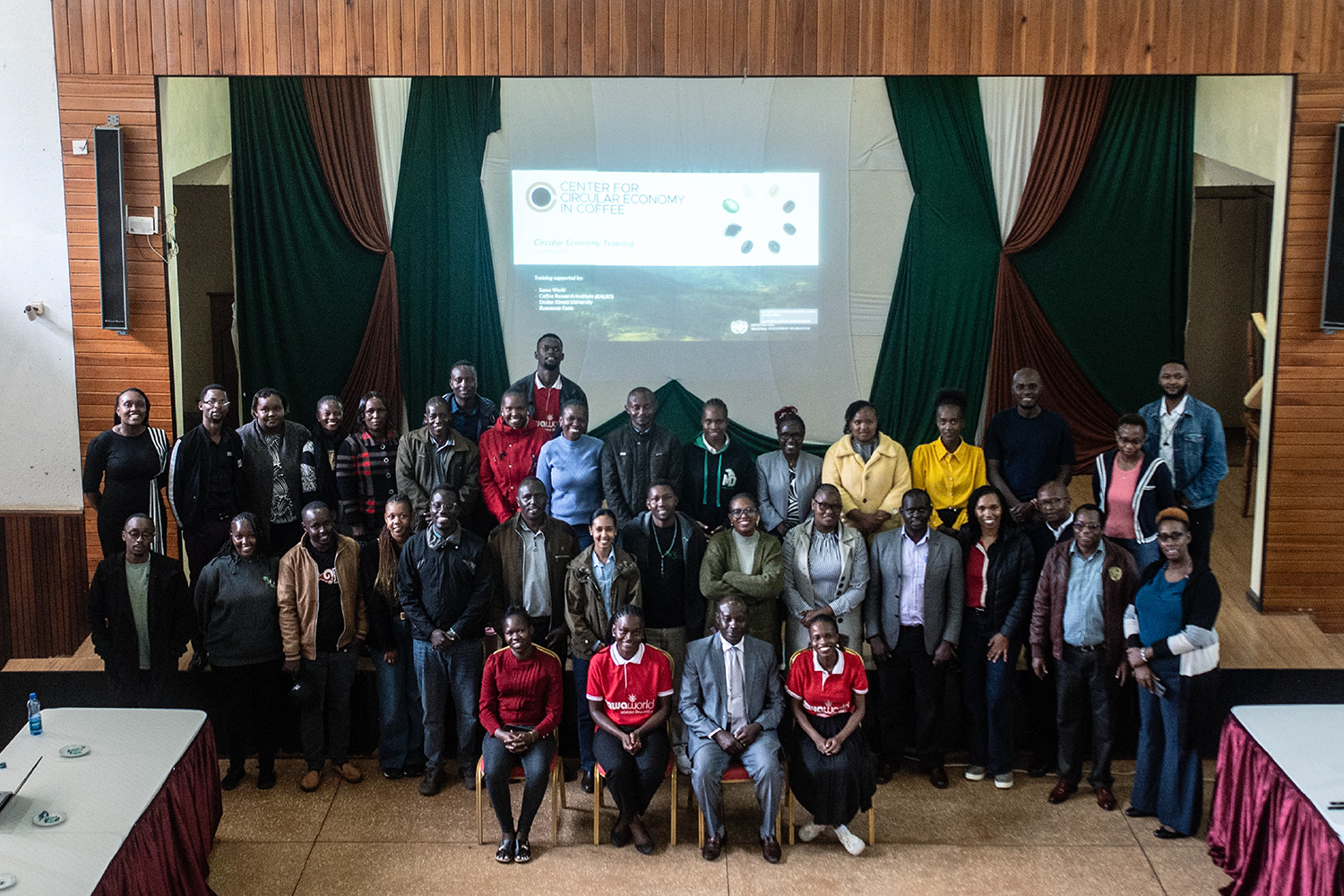
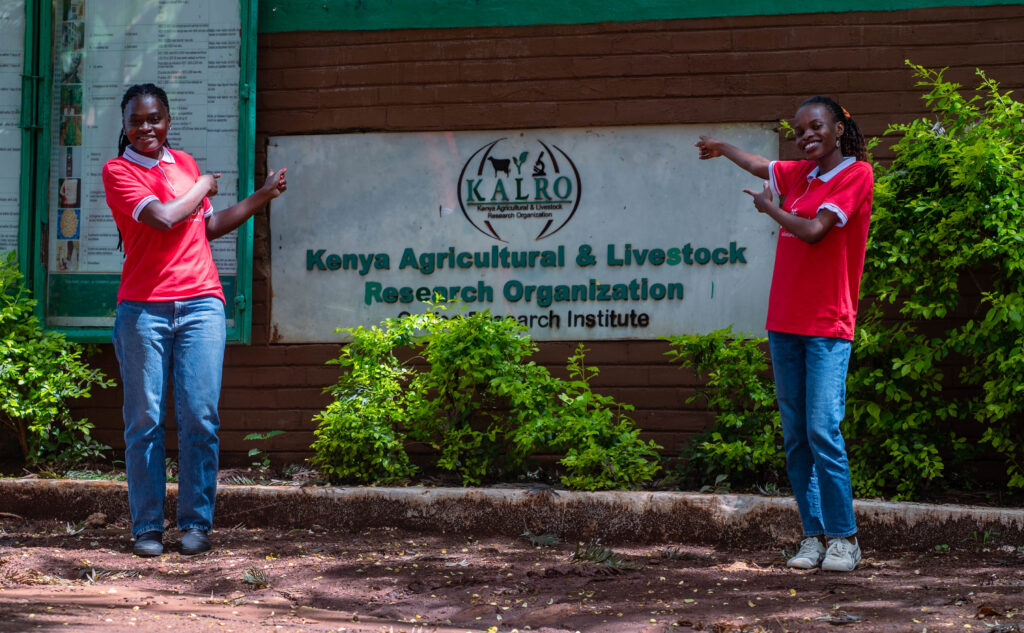
This question was at the heart of Sawa World’s participation in the Circular Economy Training, a partnership delivered by the Center for Circular Economy in Coffee (C4CEC) and the United Nations Industrial Development Organization (UNIDO), with support from the Italian Ministry of Foreign Affairs and International Cooperation at the Coffee Research Institute (CRI) of the Kenya Agricultural and Livestock Research Organization (KALRO) in Ruiru, Kenya.
At this training, Sawa World provided practical circular economy practices to 34 trainers, creating an important opportunity for knowledge exchange across East Africa.
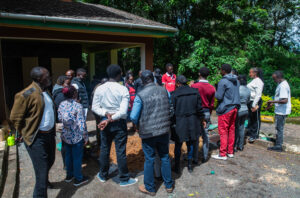
Turning Coffee By-Products into Opportunities
Coffee production generates different forms of agricultural waste and by-products. Rather than viewing these materials simply as waste, a circular economy approach looks at how they can be recycled, reused, and reproduced.
For coffee-growing communities, this can mean healthier soils, reduced waste, and opportunities for income generation.
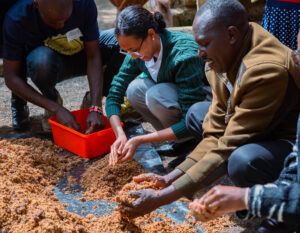
Sawa World brought this approach to the training through its Solution Entrepreneurs, who facilitated practical, hands-on sessions demonstrating how locally developed skills can be applied to turn agricultural waste into valuable products.
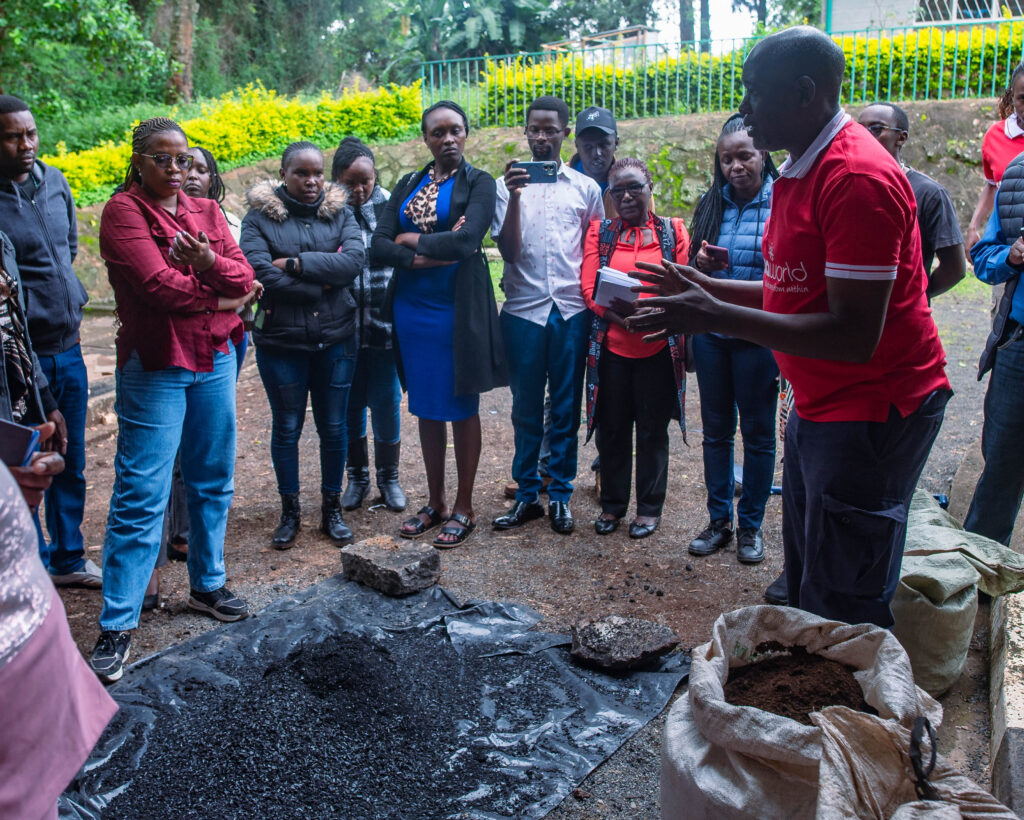
Sawa World trained the participants in three key circular economy practices, that included:
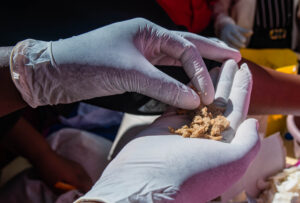
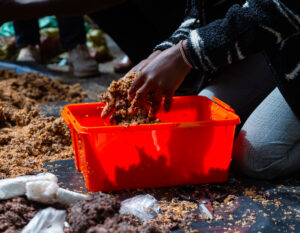
- Mushroom Cultivation: using coffee husks as a growing medium to create additional livelihood opportunities.
- Black Soldier Fly Farming: transforming organic waste into valuable resources while supporting sustainable farming systems.
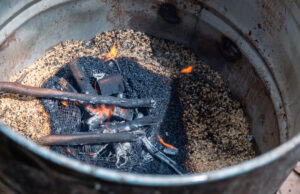
- Biochar Production: converting agricultural waste into biochar that can contribute to improved soil health and productivity.
Solutions Developed from Within Communities
At the centre of Sawa World’s approach is the belief that communities already have knowledge, creativity and practical solutions to help address the challenges they face, Solutions From Within.
The circular economy practices shared during this training in Kenya reflect this philosophy.
Skills such as mushroom cultivation, black soldier fly farming and biochar production demonstrate how materials that may otherwise be discarded can be transformed into productive resources. They also show how farmers can diversify their income while making better use of locally available materials.
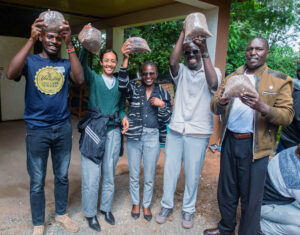
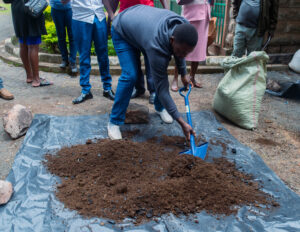
From Uganda to Kenya and Beyond
For Sawa World, the journey to Kenya was an opportunity to share practical, locally developed solutions that support sustainable livelihoods, a circular economy, and the future of coffee-growing communities.
It also demonstrated the potential of taking Solutions from Within beyond the communities where they originate. Through strong partnerships and knowledge exchange, practical ideas can be adapted to new contexts, reaching more people and creating new opportunities.
The journey from Uganda to Kenya is an example of what is possible when local knowledge, practical local income skills, and strong partnerships come together.
It reminds us that solutions do not have to start big to create meaningful change.
Waste can become a resource, skills can become livelihoods, and local solutions can travel far beyond their communities of origin.
Watch the Training in Action
Together, we can build a more circular, resilient, and opportunity-filled future for coffee-growing communities.
Connect with Sawa World to explore how we can work together to take locally developed solutions further. Call: +256 789 981 872 Email: info@sawaworld.org